Principles of selecting a BMS for a battery pack

Principles of selecting a BMS for a battery pack

Here are some simple rules to help you choose the right BMS for the package you are designing.

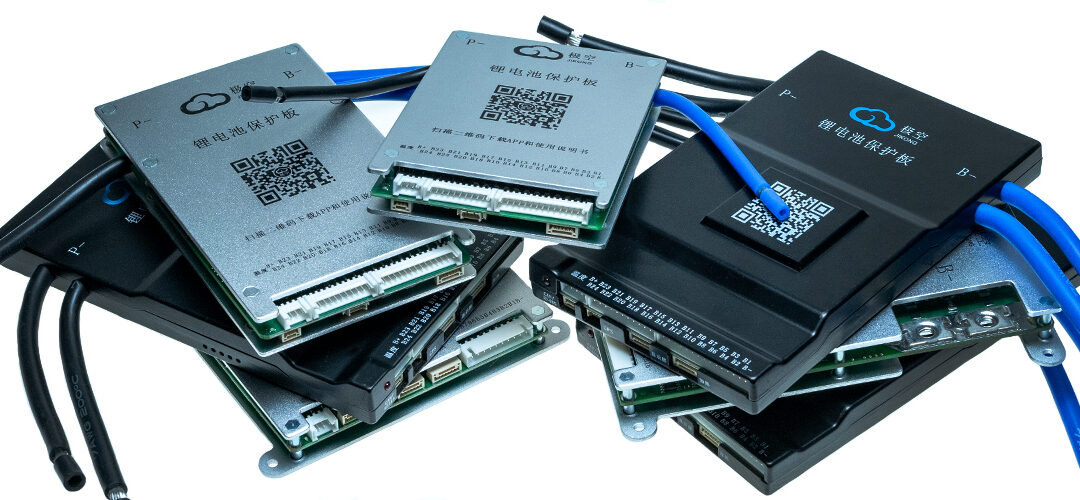
  • Type of cells. Due to the different operating range voltages for different cells, it is necessary to choose a BMS designed for the correct cell type. For example, a BMS for LiFePO4 cells will protect an operating range between 2.5 and 3.65V per cell, while one designed for LI-Ion cells will protect 2.7 to 4.25V. It is not possible to use them interchangeably.
  • Number of cells in the package. Each BMS is adapted to the specific number of cells it supports. This information is given in the BMS symbol.
  • Type of BMS. Plain or SMART.
    • The traditional BMS does not require any maintenance during the operation of the package. All the safety parameters are set in it at the factory, and it is practically “invisible” to us when connected. Its additional advantages are smaller size and weight, much lower resting current consumption – important if you anticipate longer battery storage periods, and, of course, a lower price. In the case of the BMS DALY, an additional advantage is total water and dust resistance.
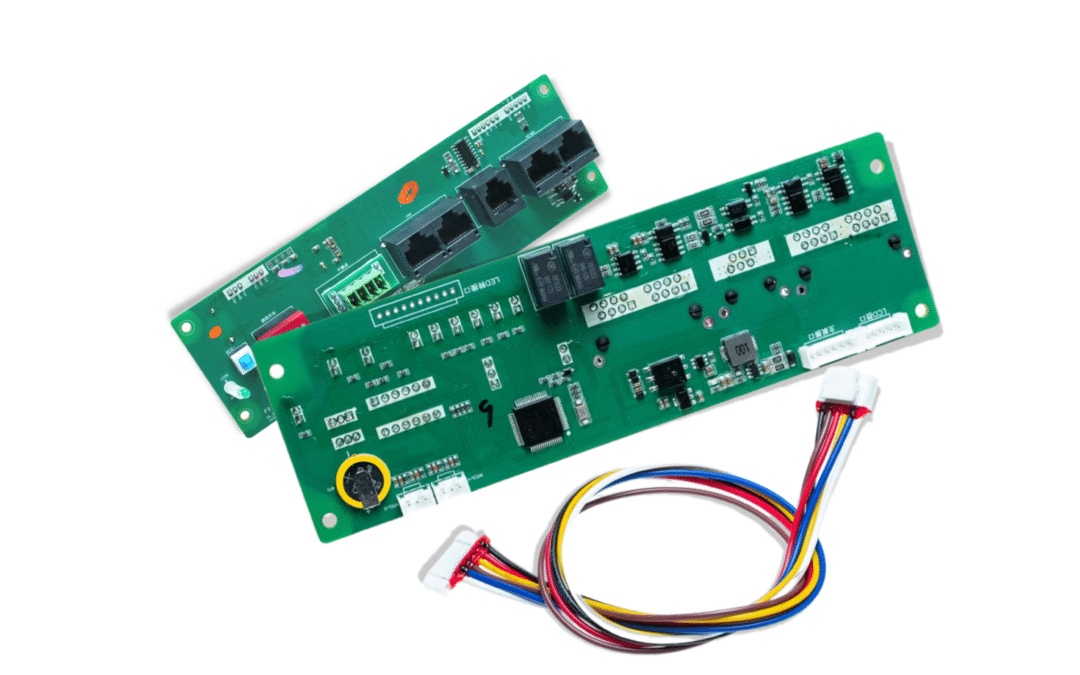
    • BMS SMART- enables full monitoring of the built package. Virtually all parameters for the entire battery and individual cells are immediately available. Depending on the communication method and the software used, it is also possible to partially change them. BMS SMART, depending on the version, can work with mobile devices (Bluetooth), LCD touch screens, voltage indicators, PCs and other external devices. Their disadvantages are larger size, more complicated operation (if you want to use additional functions) and higher resting current consumption. For this reason, they are not recommended for packs with a capacity of less than 10Ah. All batteries equipped with BMS SMART should be periodically recharged during storage. Due to the presence of multiple connection slots, it is not possible to achieve the same degree of moisture protection as for ordinary BMS.

When choosing a SMART BMS, it is worth considering right away how we will monitor the data coming from it. If we only want to use the mobile app, it doesn’t matter much. All BMS of this type allow communication over BT.

Also, the LCD touch screen fits all SMART Daly BMS as an alternative to BT. The use of a battery level indicator already requires the existence of an LED 12 connector, and communication over UART, RS 485 or CAN a proper communication connector.

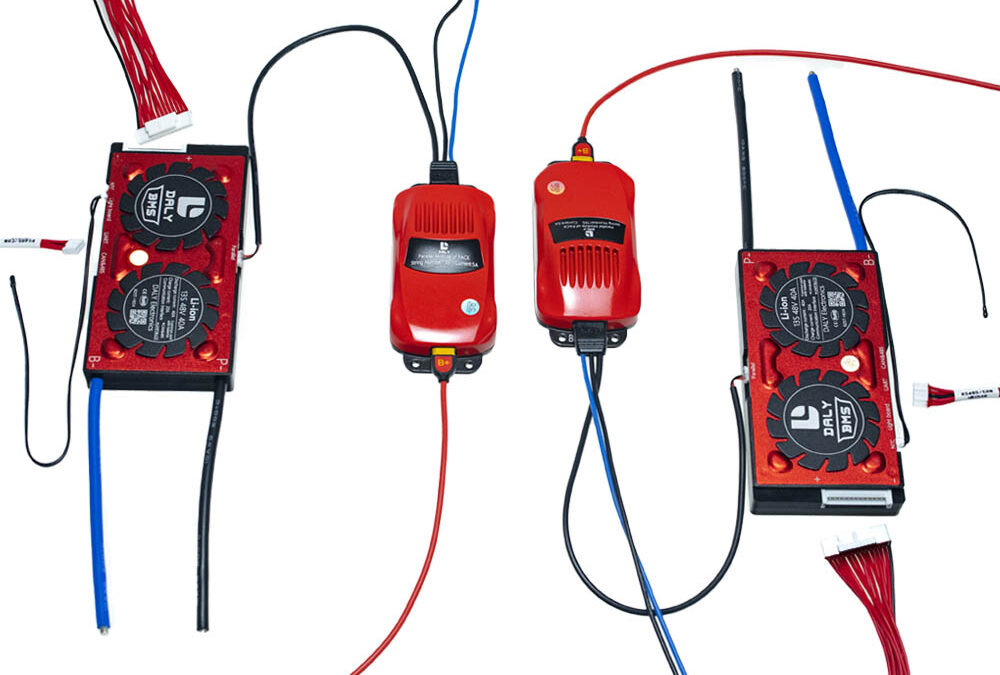
  • If you plan to connect batteries equipped with a BMS in parallel, the problem is much more complicated and requires the use of special BMS, further supplemented by a “parallel module.” This topic is discussed in detail here.

Warto przeczytać

Principles of selecting a BMS for a battery pack

Principles of selecting a BMS for a battery pack

The most important information contained in the content: Types of cells Number of cells in a pack marked S-series and P-parallel Maximum continuous current for discharge and charge Balancers and balancing current Temperature probe BMS Standard and Smart BMS for...

read more
Charging and storing energy packs and energy storage units.

Charging and storing energy packs and energy storage units.

The most important information contained in the content: Types of cells (batteries) and selection of chargers for them Charging lithium batteries, including those working with an inverter Charging nickel batteries Charging lead-acid batteries First use and storage of...

read more
Energy storage – the benefits of having your own storage

Energy storage – the benefits of having your own storage

An increasingly common problem for owners of photovoltaic installations is the issue of reselling produced electricity. It would seem that the prosumer rules are simple - if we produce energy, we can resell it, and when we need it, we can buy it. A significant number...

read more
How to build a home energy storage?

How to build a home energy storage?

The possibility of using almost all of the energy produced by photovoltaics, with practically no financial losses caused by resale and repurchase, and independence from temporary interruptions in supply, are arguments in favor of having your own energy storage....

read more
Parallel connection of lithium batteries

Parallel connection of lithium batteries

​When using standard BMS, parallel connection of lithium batteries is not allowed due to the very probable damage to the BMS electronics (which may result in damage to the cells). This is the result of uncontrolled current flow between batteries due to the difference...

read more

Information on first use and storage of batteries

Information on first use and storage of batteries For a trouble-free, long-lasting battery life, it is very important to charge them first and store them properly during the period when they are not in use. The procedure depends on the type of battery. Ni-Cd...

read more
Charging and storing packets and energy storage

Charging and storing packets and energy storage

Charging batteries is a topic often neglected by users. The correct charging process has a decisive impact on the battery's performance, its durability and, most importantly, its operational safety. The easiest way out is to use the charger that came with the device...

read more
Universal Li-Ion battery packs for underwater applications

Universal Li-Ion battery packs for underwater applications

Universal Li-Ion battery packs for underwater applications We offer you a unique program to provide universal battery packs applicable to most of the flashlights and heating systems in use for divers. The design of the packs, was conceived to provide the largest...

read more

OnVOLT – komponenty – magazyny energii – BMS – balansery – akumulatory

Wykorzystujemy ciasteczka do spersonalizowania treści i reklam, aby oferować funkcje społecznościowe i analizować ruch w naszej witrynie.

Informacje o tym, jak korzystasz z naszej witryny, udostępniamy partnerom społecznościowym, reklamowym i analitycznym. Partnerzy mogą połączyć te informacje z innymi danymi otrzymanymi od Ciebie lub uzyskanymi podczas korzystania z ich usług.

Informacja o tym, w jaki sposób Google przetwarza dane, znajdują się tutaj.