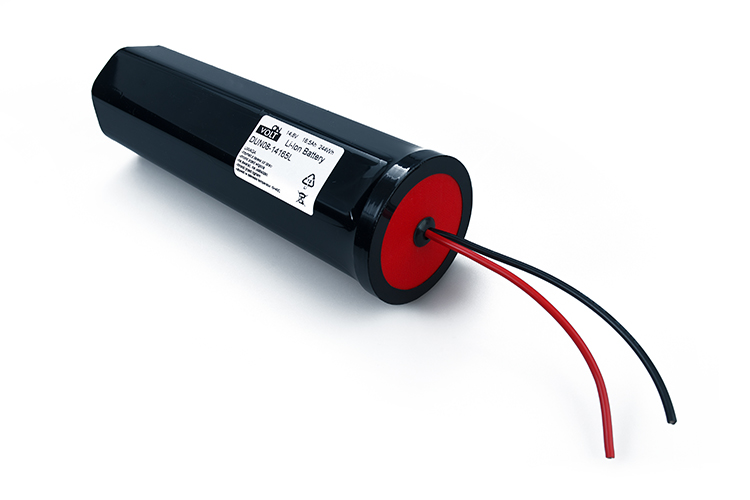
Charging and storing packets and energy storage

Charging batteries is a topic often neglected by users. The correct charging process has a decisive impact on the battery’s performance, its durability and, most importantly, its operational safety.

The easiest way out is to use the charger that came with the device from the factory. Most manufacturers of battery-powered devices provide an optimized charger.

The charger can be a separate device, but it can also be part of a larger device that works with the package, such as an inverter (inverter).

The problem arises when the charger is damaged and needs to be replaced, or when you build the pack yourself. Then it is worth learning the basic rules related to charging different types of batteries.

  • Three types of batteries are most commonly used:

    • Lithium – Li-Ion (lithium-ion), Li-Po (lithium-polymer) or Li-FePO4 (lithium-iron).

    • Nickel – Ni-Mh (nickel-metal hydride), Ni-Cd (nickel-cadmium) used in older devices, increasingly rare on the market.

    • Lead – Pb (lead) automotive and stationary batteries

The basic rule is that chargers are not interchangeable between the three groups. Each requires a different charging process and trying to use the wrong type of charger can result in the inability to charge or destroy the battery, in extreme cases there is a real risk of fire or explosion of the battery (mainly with Li-Po cells).

Example of marking on the charger.

Example of marking on the package.

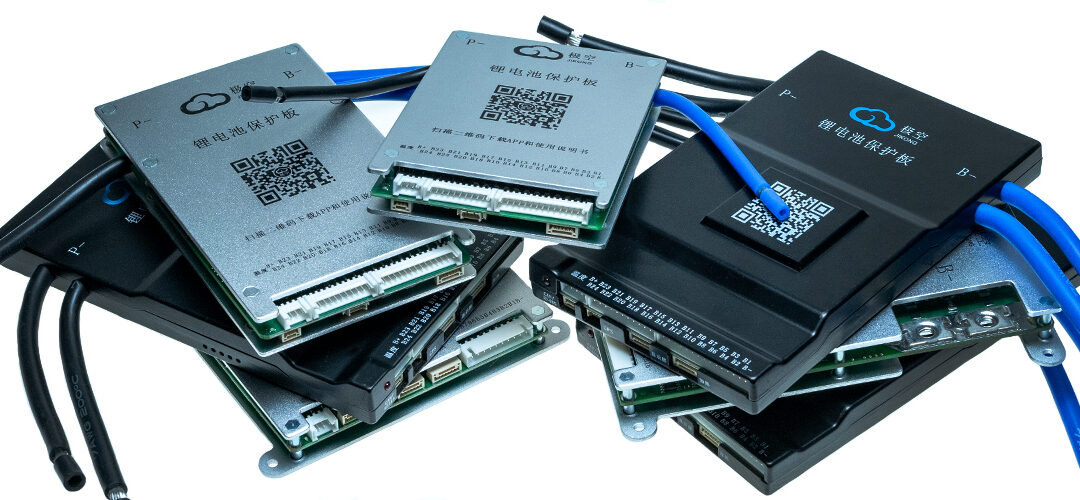
Charging lithium batteries – is a very precise process, in simple terms, consisting of two phases – a constant current charging phase and a constant voltage charging phase. Therefore, the charger must be dedicated to a specific number of cells connected in series. Therefore, a 3S (11.1V) pack, for example, requires a different charger than a 4S (14.8V) pack. This is critical to ensure safety requirements. While a properly sized BMS will not allow the pack to be overcharged, it is not correct for the charging process to be terminated by the BMS. It is supposed to be completed by a properly sized charger, and the BMS is supposed to watch over the voltages of individual cells and step in if one of them is overcharged (which the charger “doesn’t know”, because it only has information about the voltage of the entire pack). Using chargers from lead batteries to charge LIFePO4 batteries is not correct (lacking the required charging phases with constant current and voltage). Nevertheless, due to the coincidental coincidence of voltages, the use of chargers from 12V batteries for 4S LiFePO4 packs and chargers from 24V batteries for 8S LiFePO4 packs is sometimes used. However, you should be aware that it can reduce the life of the cells and you will probably not be able to achieve 100% charge. Any resulting damage to the cells will not be covered by the warranty.

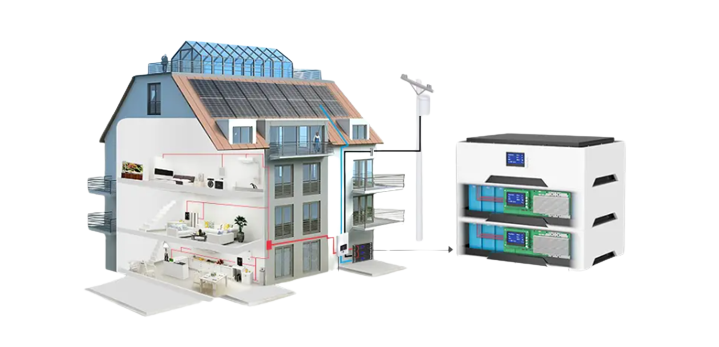
Charging of lithium batteries working in an inverter (inverter) system. Two standards of inverter operation are possible.

  • Automatic – the data on the level of charge of the battery is sent to the inverter from the BMS via CAN/RS485 link. Based on them, the inverter makes decisions about the charging process (start, end, CC/CV phase change, transition to “Float mode”), as well as the end of the battery discharge capability. In this mode, you just need to make sure that the inverter supports the type and voltage of the battery you intend to operate, and that the BMS is set up to exchange data according to the protocol supported by the inverter.

  • Manual – no inverter-BMS data exchange required. Completion of the charging and discharging process is based on manual setting of the voltage range on the inverter. The key is to set it so that the range on the inverter is “narrower” than on the BMS.

For example, for a 16S LifePO4 pack, you can set the operating voltage range to 3.0-3.5V per cell, or 48.0-56.0V per pack. Then on the BMS you need to set a wider range, for example, 2.8-3.65V per cell, or 44.8-58.4V. Such settings ensure that the inverter controls the charging and discharging process. Completion of the charging or discharging process by the BMS can also result in a battery disconnection message when working with an inverter and the need to restart the device.

Charging nickel batteries – involves charging with a constant current. The charger shutdown is based on parameters such as charging time, voltage reached, cell temperature, or for more advanced chargers, ΔV voltage gain. Use a charger matched to the number of cells connected in series in the pack (each cell has a voltage of 1.2V), for example, a pack with 10 cells has a voltage of 12V. In practice, on the charger is indicated its rated charging voltage. The second selection parameter is the charging current. While using an “over-powerful” charger for a small pack will reduce charging time, it will drastically reduce the life of the pack and may result in overheating of the cells.

Charging lead batteries – involves charging to a certain voltage. The current drops as it charges.

The range of loaders available from us, you can find here. If you have any doubts, please contact us. Properly selected charger, is a guarantee of safety and proper operation of the battery.

Information on first use and storage of batteries

For a trouble-free, long-lasting battery life, it is very important to charge them first and store them properly during the period when they are not in use. The procedure depends on the type of battery.

  • Li-Ion, LiPo and LiFePO4 batteries – the battery is delivered, as partially charged. Before operation, it should be charged to the end without interrupting the process. Then you can operate the device normally. During long storage, it is best to maintain a partially charged state. This means that you should not wait until charging is complete, it is better to stop charging “in the middle”. Stored in this way, the battery will retain its parameters for a very long time. You just need to remember to recharge the package immediately before operation. The natural tendency of lithium cells to self-discharge is very low. However, since any battery pack based on these cells must be equipped with a BMS that draws minimal current even during sleep, it is necessary to check the charge level of the pack from time to time and recharge it if necessary. This is especially important for small packs (a few-something Ah) equipped with BMS SMART. Lack of such control can lead to cell damage. The second case where this control is very important is when you leave the battery connected to the inverter during a period of prolonged lack of sunlight. Since the inverter will then be powered by the battery, discharge can proceed rapidly. We recommend that during such periods, the inverter enable the low-current power supply function.

  • Ni-Cd (nickel-cadmium) batteries – these batteries are no longer supplied as new (they have been replaced by Ni-Mh (nickel-metal hydride)), but it is worth knowing that they should be discharged “to the end” and then charged until the process is complete. We store them in a charged state, and it is a good idea to discharge and recharge them every few weeks during periods of intermittent use.

  • Ni-Mh (nickel-metal hydride) batteries – such a battery, once purchased, we can immediately, normally operate in the device (with the knowledge that the operating time may be shorter than the target). After discharging, we charge it to the end of the process and during the next use, we also discharge it completely. By discharge to the end, we mean normal discharge during which we observe a marked decrease in the power of the device, or the brightness of the light. We try never to discharge the battery “to zero”, such as leaving the device on unattended. Such a discharge is very harmful to the battery and the consequences of such an action are not covered by the warranty. After another full charge, we can already operate the battery normally, we do not need to discharge it completely, we can recharge it after use. We store Ni-Mh batteries in a charged state, during longer breaks we recharge them every few weeks (without discharging them first).
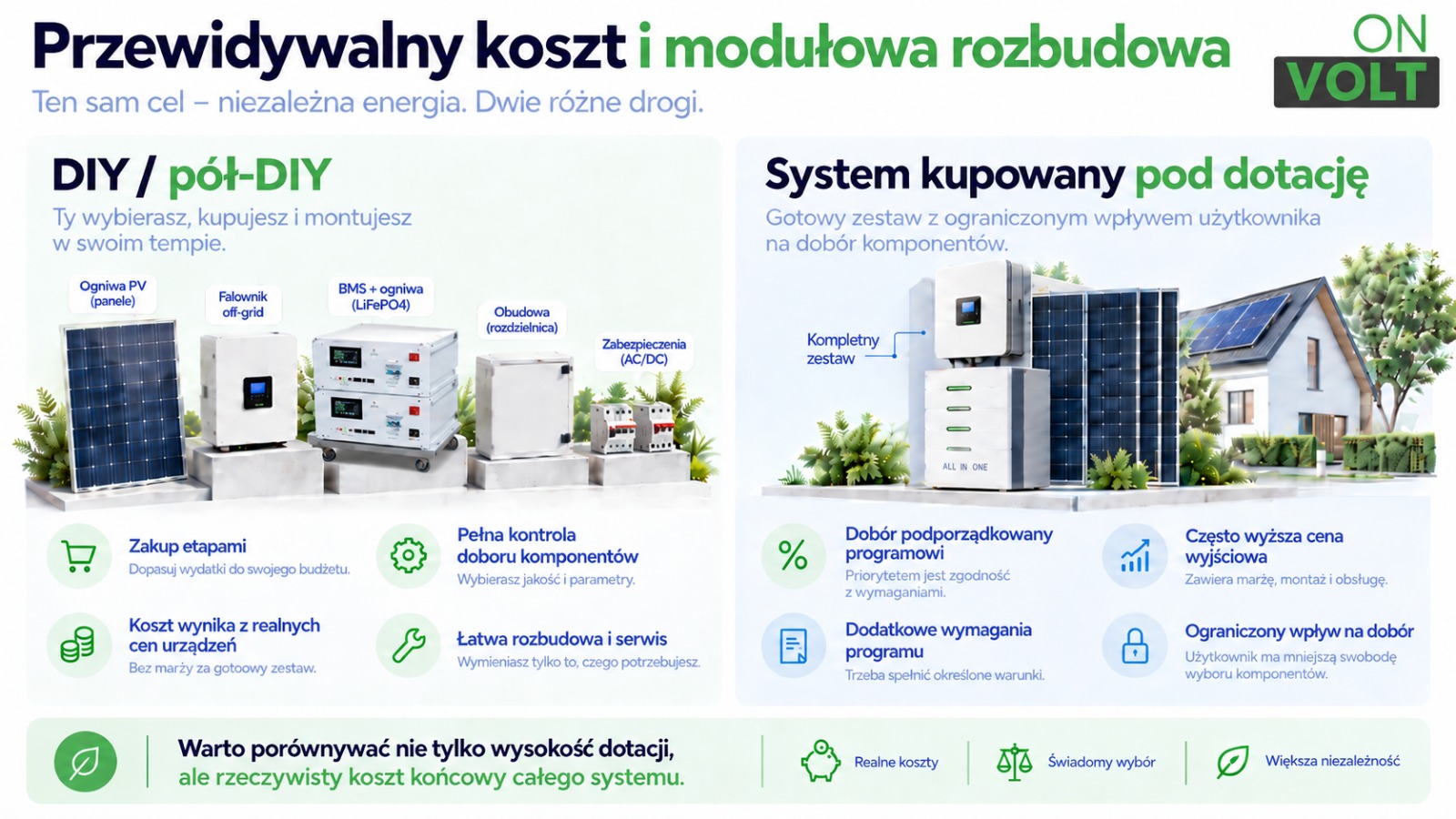
On-grid, zero-export i prawdziwy off-grid – czym się różnią?


Cecha

On-grid

Zero-export

Prawdziwy off-grid

Falownik pracuje równolegle z siecią OSD

Tak Tak Nie

Techniczna możliwość przepływu energii do sieci

Tak Zwykle tak Nie

Eksport ograniczany programowo/CT

Nie dotyczy Tak Niepotrzebny

Zgłoszenie źródła do OSD

Tak Tak, ze względu na techniczną możliwość oddawania energii Nie dotyczy źródła nieprzyłączonego do sieci. Energia może być tylko pobierana.

Praca podczas zaniku sieci

Standardowo nie Zależnie od konstrukcji Tak

Możliwość korzystania z sieci jako rezerwy

Tak Tak Tak, jeśli układ jest odpowiednio zaprojektowany

Możliwość pełnej lokalnej pracy bez Internetu

Zależy od urządzenia Zależy od urządzenia Tak

Kontrola OSD nad źródłem pracującym równolegle z siecią

Tak Tak Nie

Najważniejszy cel

Produkcja i współpraca z siecią Brak planowanego eksportu Autonomia i separacja od sieci

Najważniejsza różnica dotyczy technicznej możliwości przekazywania energii do sieci.

W systemie zero-export falownik nadal pracuje równolegle z siecią. Przekładnik CT mierzy kierunek przepływu energii, a falownik reguluje moc tak, aby ograniczać eksport.

W prawdziwym off-gridzie taka regulacja nie jest potrzebna, ponieważ energia z PV lub akumulatora nie ma elektrycznej drogi do sieci dystrybucyjnej.

Czy system off-grid trzeba zgłaszać do OSD?

Prawo energetyczne przewiduje procedurę zgłoszenia w przypadku przyłączenia mikroinstalacji do sieci dystrybucyjnej. Art. 7 ust. 8d⁴ odnosi się właśnie do podmiotu ubiegającego się o przyłączenie mikroinstalacji do sieci OSD.

Jeżeli więc instalacja PV i magazyn energii tworzą rzeczywiście autonomiczny system, który nie jest przyłączony do sieci jako źródło, nie jest wymagane takie zgłoszenie.

Dom nadal może posiadać normalne przyłącze energetyczne, licznik i umowę ze sprzedawcą energii.

Sieć może dostarczać energię dla potrzeb domu lub ładowania magazynu energii, ale fizycznie instalacja PV z magazynem nie może dostarczać energii do sieci.

Brak konieczności zgłoszenia do operatora poza oczywistym uproszczeniem formalności daje dostęp do znacznie szerszej oferty falowników. Nie musimy już ograniczać się do urządzeń znajdujących się w „Wykazie certyfikowanych urządzeń” PTPiREE — Polskiego Towarzystwa Przesyłu i Rozdziału Energii Elektrycznej.

Aby być w zgodzie z obowiązującymi przepisami trzeba dobrze zrozumieć co oznacza brak możliwości oddawania energii do sieci.

Większość falowników określanych przez producenta jako Offgrid lub Hybrid nie wyklucza całkowicie możliwości oddania energii do sieci. Jest ona tylko zablokowana z poziomu oprogramowania.

„Zero export” to nie zawsze off-grid

To bardzo ważne, ponieważ wiele urządzeń sprzedawanych jako hybrydowe posiada funkcję:
• Zero Export,
• Feed-in Disable,
• Export Limit.

Takie ustawienie samo w sobie nie oznacza jednak fizycznego odseparowania instalacji. Instalacja z takim falownikiem, o ile jest do niej podłączona sieć, powinna być zgłoszona do operatora pomimo włączonej opcji blokującej eksport.

W prawdziwym off-gridzie eksport nie powinien być „zabroniony programowo”, powinien być technicznie niemożliwy.

Jak upewnić się, że nasza instalacja nie może oddawać energii do sieci, a wiec nie wymaga zgłoszenia?

Istnieją dwie ścieżki postepowania.

O ile mamy jasna deklarację producenta falownika, że eksport energii nie jest technicznie możliwy, sprawa jest prosta. Takiej instalacji pomimo podłączenia do niej wejścia napięcia z sieci (dla celów uzupełniania niedoborów i ewentualnego ładowania magazynu) nie musimy zgłaszać.

Niestety oferta takich urządzeń jest bardzo ograniczona i nie są one często najtańsze.

Jeśli jednak nasz falownik ma tylko programowo blokowaną możliwość eksportu, musimy zaprojektować system tak, by go uniemożliwić.

Konieczne jest wtedy fizyczne przełączanie źródeł. Instalacja odbiorcza domu jest zasilana albo z sieci, albo z falownika.

To rozwiązanie jest szczególnie czytelne, ponieważ separacja nie zależy od działania algorytmu ani pomiaru CT.

Dobór wielkości elementów systemu off-grid

Podstawowym elementem instalacji są oczywiście panele fotowoltaiczne. Oczywiście, czym będzie ich więcej i będą miały wyższą moc, tym szybciej będziemy mogli naładować nasz magazyn. Pozostaje otwarte pytanie czy jest nam to faktycznie potrzebne.

Najlepiej więc jest najpierw określić pojemność magazynu potrzebną do zasilania domu przez określony czas, a dopiero wtedy zastanowić się nad mocą paneli i ich rozmieszczeniem.

Znając zapotrzebowanie naszego domu na energię elektryczną (warto przewidzieć nadmiar, gdyż prawdopodobnie zwiększymy jej zużycie, mając do dyspozycji „darmowy prąd”) możemy oszacować wielkość magazynu.

Jeśli np. nasz dom pobiera 5kWh energii na dobę, to przy założeniu zasilania off-grid przez dwa dni będziemy potrzebować magazynu ok 12-16kWh. Jeśli jest to 8-10kWh to rozsądnym wyborem będzie 25-30kWh. Do takich magazynów rozsądna będzie instalacja PV o mocy 6-10kWp.

Naszym zdaniem nie ma sensu budowanie przewymiarowanej instalacji PV, ani zbyt dużych magazynów. Da to wprawdzie własne zasilanie przez dodatkowych kilka dni w roku, ale nie będzie uzasadnione ekonomicznie.

Tu jest kluczowa zaleta budowy systemu off-grid. Ponieważ jesteśmy znacznie mniej ograniczeni kwestiami formalnymi, możemy instalacje rozbudowywać wg rzeczywistych potrzeb i obserwacji.

Przykładowo: jeśli widzimy, że nasz magazyn jest zwykle naładowany na 100% już przed południem, ale po jednym dniu gorszej pogody rozładowuje się całkowicie, to ewidentnie powinniśmy go rozbudować.

Ale może tez być sytuacja odwrotna. Pomimo słonecznej pogody nasza instalacja PV nie jest w stanie naładować w ciągu dnia magazynu. To sygnał do zwiększenia ilości i mocy paneli.

Oczywiście to tylko dwa przykłady. Wnioski każdy musi wyciągnąć sam, monitorując własną instalację. Najważniejsze, ze można to robić rozkładając inwestycję i wydatki w czasie, kupując tylko to, co faktycznie jest nam potrzebne.

Dobierając wielkość systemu warto pamiętać ze względów formalnych o dwóch ważnych progach.

PV do 6,5 kWp – o ile łączna moc naszych paneli nie przekracza tej wartości nie występuje obowiązek uzgadniania projektu PV z rzeczoznawcą ds. zabezpieczeń przeciwpożarowych ani zawiadamiania Państwowej Straży Pożarnej wynikający z przekroczenia tego progu.

Dla instalacji powyżej 6,5 kW takie obowiązki już występują. Często jednak są formalnością, zgłaszaną przez firmy instalujące panele.

Drugim istotnym progiem jest pojemność magazynu energii 30kWh.

Magazyn (lub magazyny podłączone do jednej instalacji) poniżej tego progu nie wymagają zgłoszenia budowlanego do starosty/prezydenta miasta oraz spełnienia wymogów ppoż.

Dlatego projektując instalację nastawioną na minimum formalności, logicznym wariantem jest magazyn 15–29 kWh.

Co dzieje się z nadmiarem energii PV?

Często pojawia się pytanie: skoro energia nie może trafić do sieci, co dzieje się latem, gdy magazyn jest pełny?

Nic nie trzeba z nią robić.

Jeżeli dom pobiera niewiele energii, a bateria jest naładowana, falownik lub regulator MPPT po prostu ogranicza moc pobieraną z paneli.

Panele nie muszą przez cały czas pracować w punkcie maksymalnej mocy.

Przykładowo instalacja może mieć w danych warunkach potencjał produkcji 6 kW, ale jeżeli dom potrzebuje tylko 800 W i magazyn jest pełny, falownik może pobierać z PV tylko energię potrzebną odbiornikom.

Czy można nadal korzystać z sieci?

Tak – w polskich warunkach jest to często najbardziej racjonalny wariant.

Off-grid nie musi oznaczać fizycznego odłączenia domu od energetyki.

Można posiadać normalne przyłącze i używać sieci wtedy, gdy:
• magazyn osiągnie niski SOC,
• przez kilka dni jest mało słońca,
• chwilowe zapotrzebowanie domu jest wysokie,
• trwa serwis instalacji.

Przez większość czasu dom może pracować według kolejności:

1. Energia z PV zasila dom.
2. Nadwyżka ładuje magazyn.
3. Wieczorem i nocą dom korzysta z akumulatora.
4. Sporadycznie, tylko przy niskim stanie naładowania akumulatora system przełącza się na sieć.
5. Następnego dnia PV ponownie przejmuje zasilanie i ładuje magazyn.

To użytkownik decyduje o minimalnym SOC, ładowaniu z sieci, rezerwie awaryjnej i priorytetach źródeł. Nie trzeba budować ogromnego magazynu ani przewymiarowywać PV tylko po to, aby pokryć kilka najgorszych zimowych dni.

Pełna kontrola wymaga odpowiedniego sprzętu

To bardzo ważne, by poprzez wybór właściwego falownika i magazynu zapewnić sobie 100% kontrolę ich ustawień i uniemożliwić ingerencję innych podmiotów (producent sprzętu, operator OSD) w działanie systemu. To jedna z kluczowych zalet prawdziwego off-grid.

Przy wyborze falownika off-grid warto sprawdzić nie tylko jego moc i cenę.

Znacznie ważniejsze są pytania:
• czy może pracować całkowicie bez Internetu,
• czy wszystkie podstawowe parametry można ustawić lokalnie,
• czy BMS komunikuje się lokalnie przez CAN lub RS485,
• czy producent może zdalnie aktualizować firmware bez decyzji użytkownika.

Dla użytkownika oczekującego maksymalnej autonomii chmura powinna być opcją do monitoringu, a nie warunkiem działania instalacji.

Minimum formalności, ale nie minimum bezpieczeństwa

System off-grid nadal jest instalacją elektryczną i powinien zostać wykonany zgodnie z zasadami ochrony przeciwporażeniowej i przeciwpożarowej.

Należy prawidłowo dobrać m.in.:

• zabezpieczenia AC i DC,

• wyłączniki nadprądowe,

• RCD tam, gdzie są wymagane,

• ochronę przeciwprzepięciową,

• zabezpieczenie magazynu,

• uziemienie,

• przekroje przewodów,

• sposób prowadzenia PE i N.

Szczególnej uwagi wymaga sposób tworzenia układu neutralnego podczas pracy wyspowej. Nie wszystkie falowniki rozwiązują N-PE w ten sam sposób.

Czy domowy off-grid ma sens?

Jeżeli celem użytkownika nie jest sprzedaż energii, lecz maksymalne wykorzystanie jej na własne potrzeby, odpowiedź coraz częściej brzmi: tak.

Szczególnie interesujący może być wariant:

PV do 6,5 kWp + magazyn poniżej 30 kWh + prawdziwy falownik off-grid + sieć jako rezerwa.

Taki system pozwala ograniczyć formalności, zachować zasilanie podczas awarii sieci i pozostawić sposób wykorzystania własnej energii pod kontrolą właściciela.

Stan prawny: wrzesień 2026 r. Informacje o formalnościach mają charakter informacyjny i wynikają z naszej interpretacji przepisów. Nie stanowią porady prawnej ani wiążącej wykładni prawa.

Warto przeczytać

Principles of selecting a BMS for a battery pack

Principles of selecting a BMS for a battery pack

The most important information contained in the content: Types of cells Number of cells in a pack marked S-series and P-parallel Maximum continuous current for discharge and charge Balancers and balancing current Temperature probe BMS Standard and Smart BMS for...

read more
Charging and storing energy packs and energy storage units.

Charging and storing energy packs and energy storage units.

The most important information contained in the content: Types of cells (batteries) and selection of chargers for them Charging lithium batteries, including those working with an inverter Charging nickel batteries Charging lead-acid batteries First use and storage of...

read more
Energy storage – the benefits of having your own storage

Energy storage – the benefits of having your own storage

An increasingly common problem for owners of photovoltaic installations is the issue of reselling produced electricity. It would seem that the prosumer rules are simple - if we produce energy, we can resell it, and when we need it, we can buy it. A significant number...

read more
How to build a home energy storage?

How to build a home energy storage?

The possibility of using almost all of the energy produced by photovoltaics, with practically no financial losses caused by resale and repurchase, and independence from temporary interruptions in supply, are arguments in favor of having your own energy storage....

read more
Parallel connection of lithium batteries

Parallel connection of lithium batteries

​When using standard BMS, parallel connection of lithium batteries is not allowed due to the very probable damage to the BMS electronics (which may result in damage to the cells). This is the result of uncontrolled current flow between batteries due to the difference...

read more

Information on first use and storage of batteries

Information on first use and storage of batteries For a trouble-free, long-lasting battery life, it is very important to charge them first and store them properly during the period when they are not in use. The procedure depends on the type of battery. Ni-Cd...

read more
Universal Li-Ion battery packs for underwater applications

Universal Li-Ion battery packs for underwater applications

Universal Li-Ion battery packs for underwater applications We offer you a unique program to provide universal battery packs applicable to most of the flashlights and heating systems in use for divers. The design of the packs, was conceived to provide the largest...

read more

OnVOLT – komponenty – magazyny energii – BMS – balansery – akumulatory

Wykorzystujemy ciasteczka do spersonalizowania treści i reklam, aby oferować funkcje społecznościowe i analizować ruch w naszej witrynie.

Informacje o tym, jak korzystasz z naszej witryny, udostępniamy partnerom społecznościowym, reklamowym i analitycznym. Partnerzy mogą połączyć te informacje z innymi danymi otrzymanymi od Ciebie lub uzyskanymi podczas korzystania z ich usług.

Informacja o tym, w jaki sposób Google przetwarza dane, znajdują się tutaj.