The most important information contained in the content: Types of cells Number of cells in a pack marked S-series and...
Principles of selecting a BMS for a battery pack
read more

€90,66
In stock
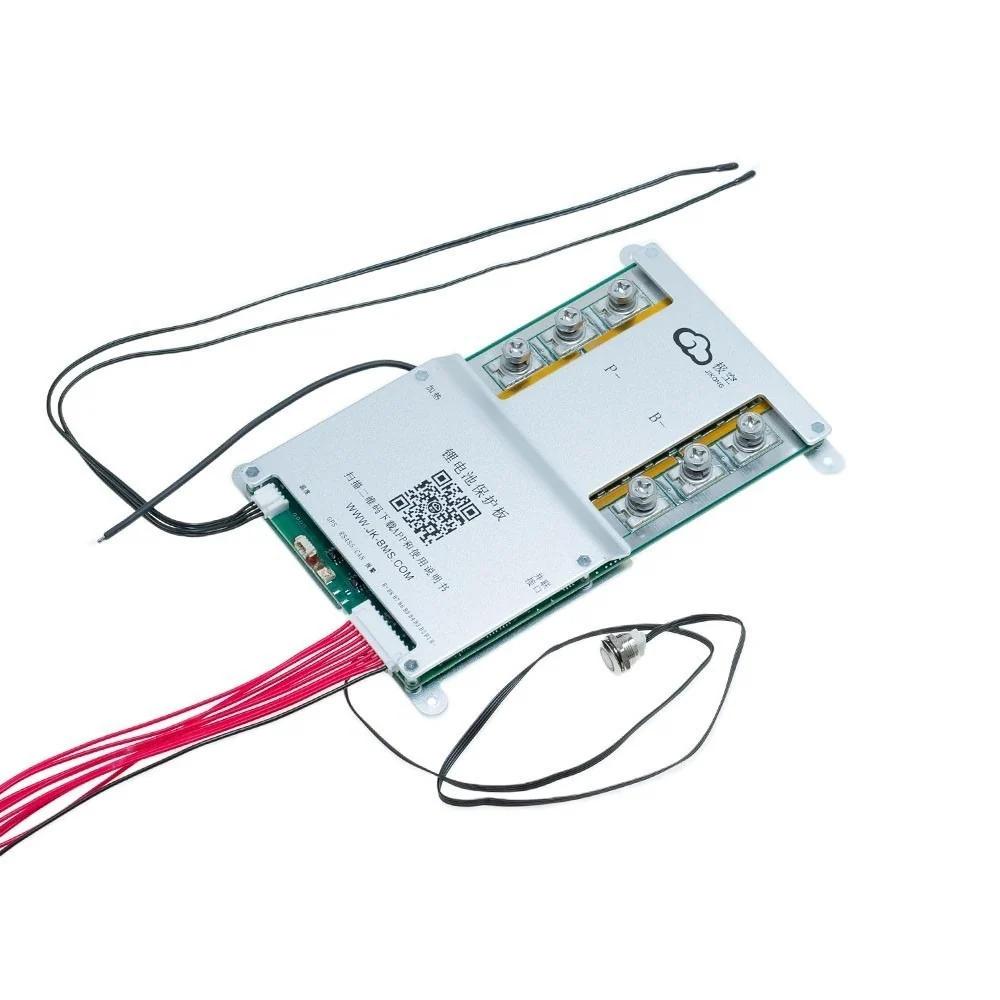
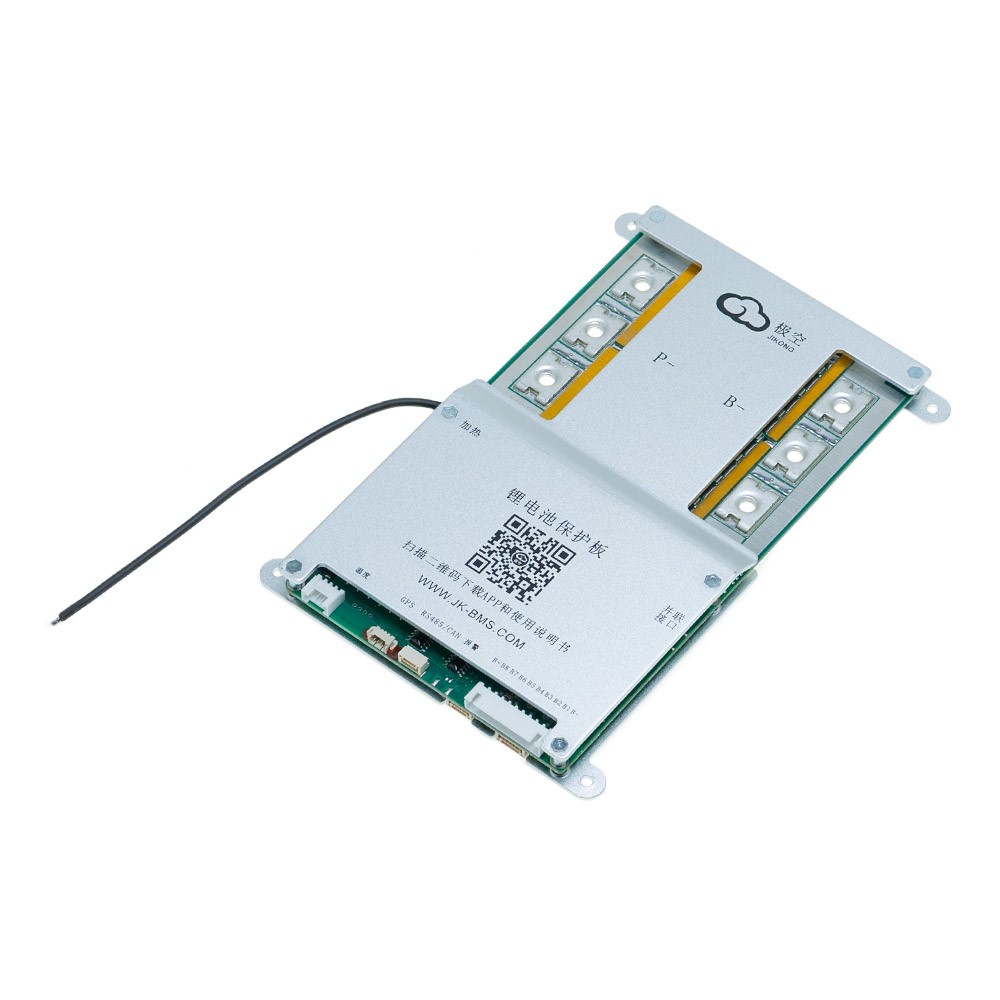
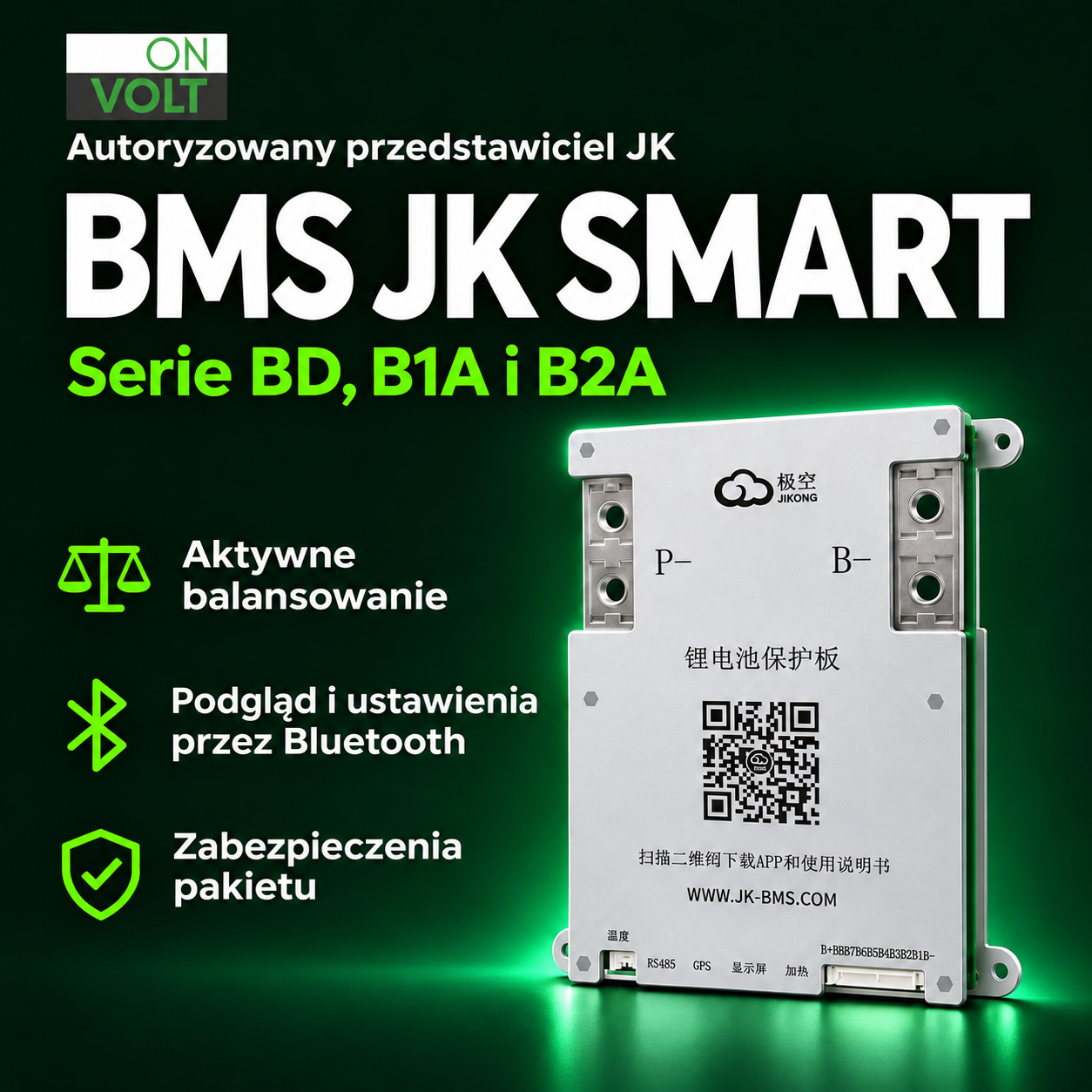
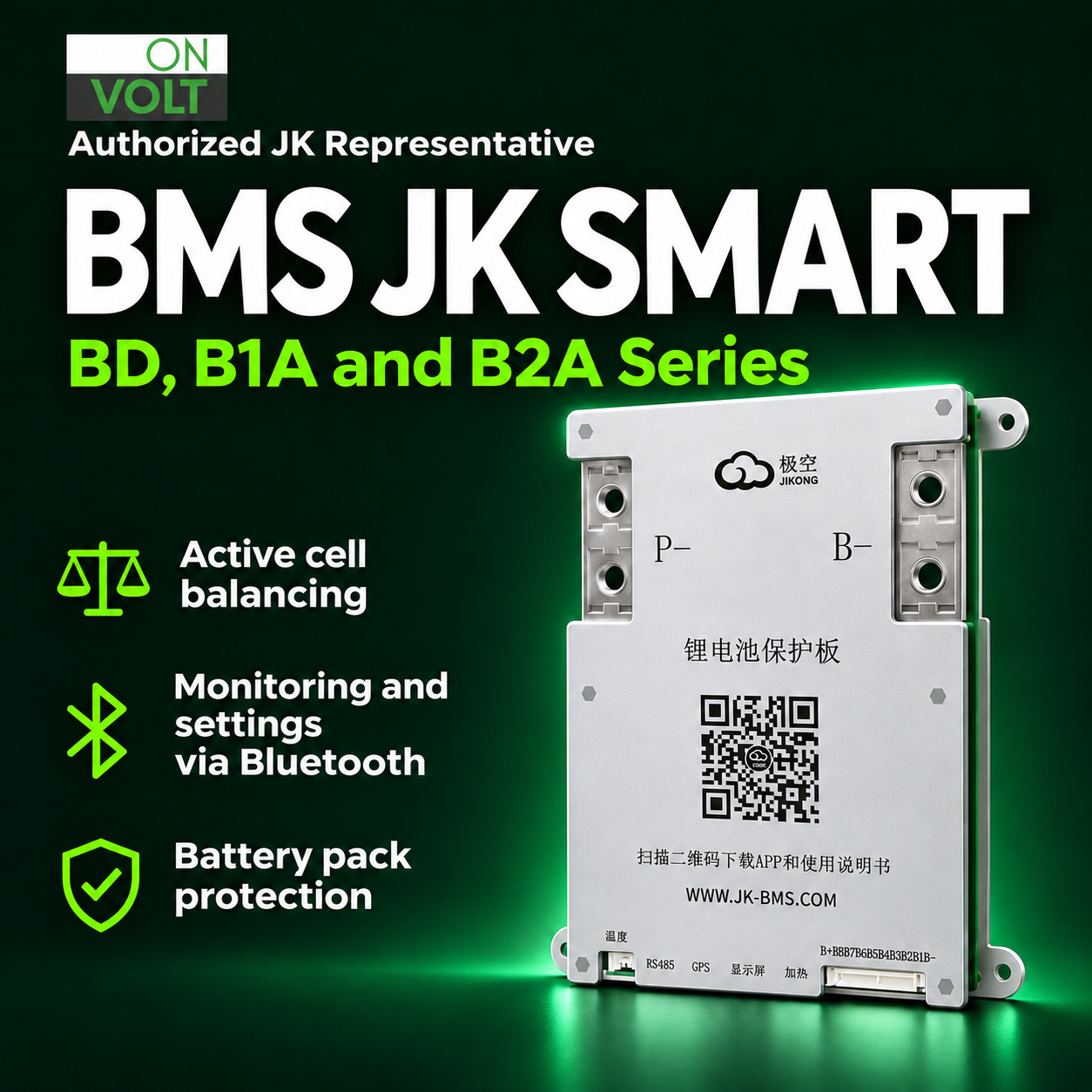
Programmable BMS module for Li-Ion, LiFEPO4, LTO packages
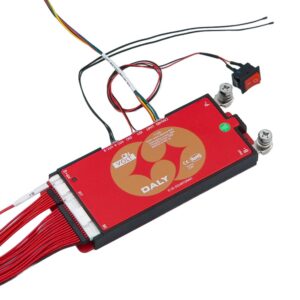
The JK B and BD series BMS monitors and protects lithium battery packs. It monitors individual cell voltages, charge and discharge currents, and temperature. When the readings exceed a preset threshold, the BMS interrupts charging or discharging, depending on the protection type.
Active balancing transfers energy from higher-voltage cells to lower-voltage cells. This helps reduce situations where a single cell reaches the protection threshold before the rest of the pack.
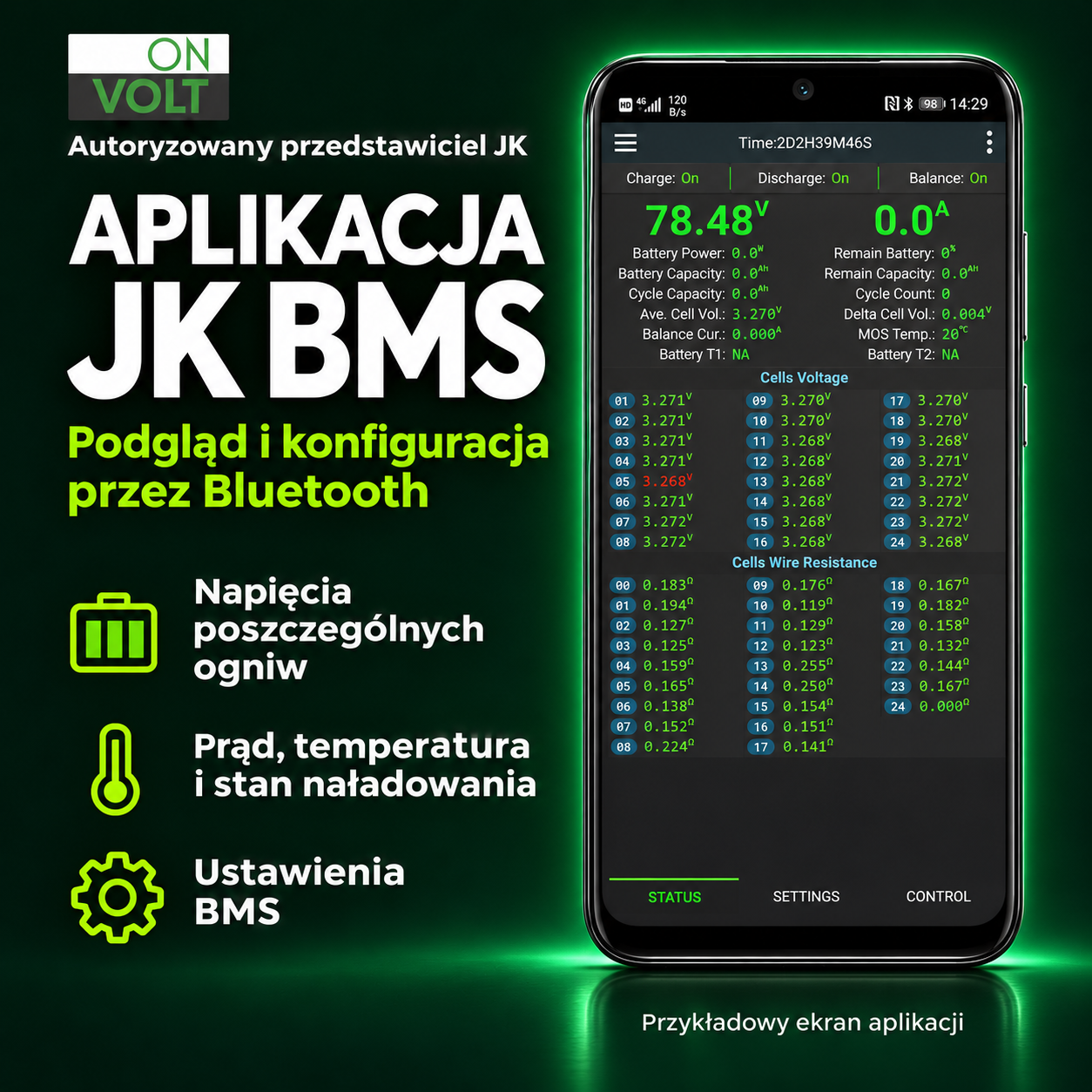
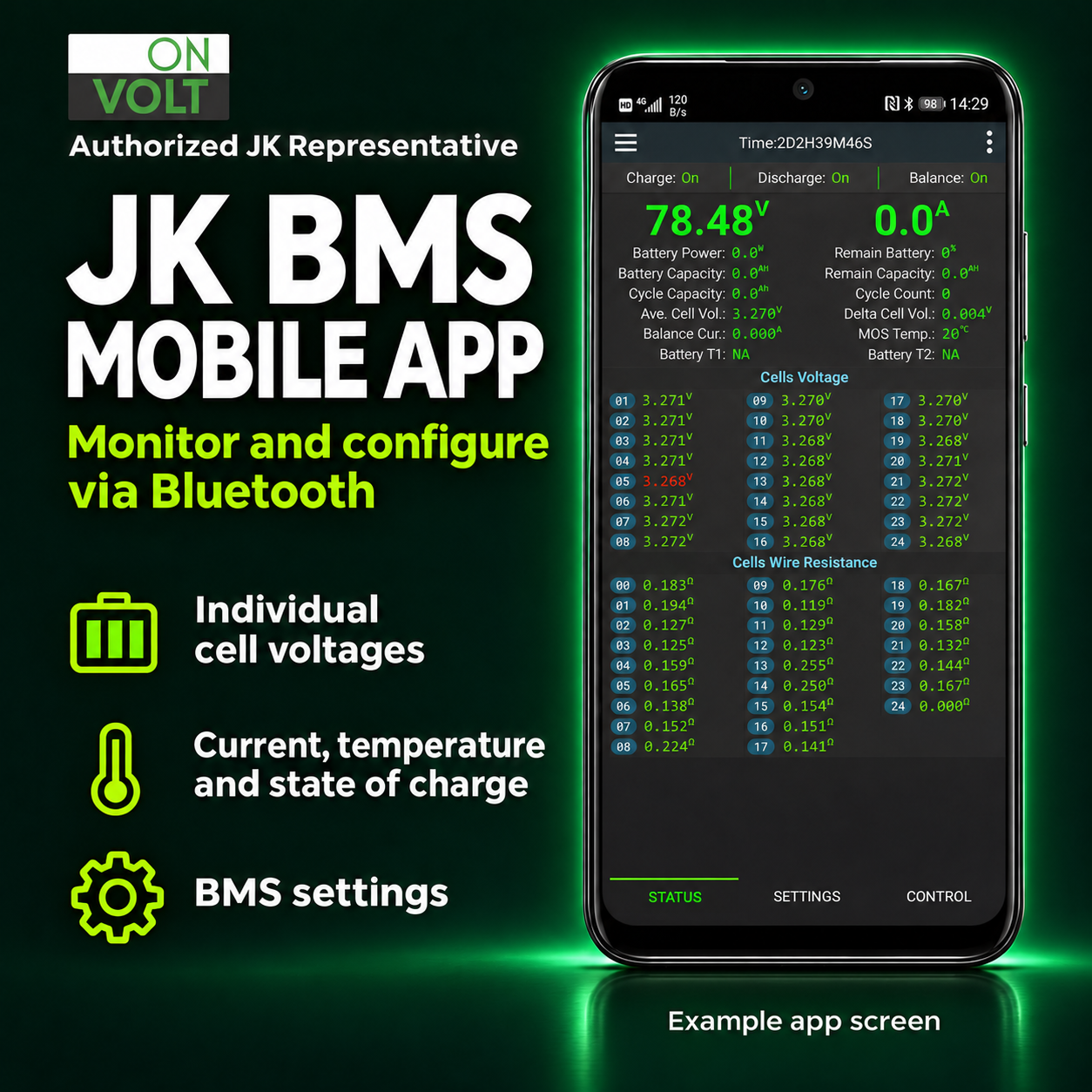
The built-in Bluetooth module enables connection to a mobile app. The app allows you to check cell voltages, the difference between the highest and lowest voltages, temperature, current, and estimated state of charge. You can also adjust protection thresholds and balancing settings to suit the cells used.
The set includes a cable to connect individual cells and a switch.
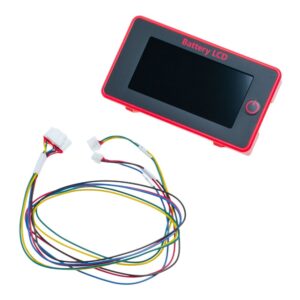
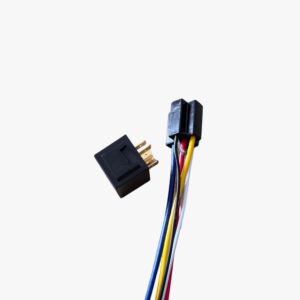
Compatible accessories are available depending on the model. BMSs from this series include:
which allow you to view battery parameters without using your phone. Selected versions also support RS485 or CAN communication and battery heating (Heat) control. When selecting accessories, check their compatibility with the exact BMS model and its connectors.
Before the first charge or discharge, set the BMS parameters appropriate for the pack. We offer paid BMS configuration based on customer-provided data. If you choose this option, please include the number of cells connected in series, battery type, battery capacity in Ah, and any other desired settings in the order notes. BMS Programming Service
Cooperation with an inverter
The JK B and BD series BMSs can be used with inverters that allow operation according to manually set battery voltage thresholds. In this mode, the inverter uses its own settings, while the BMS independently monitors and protects the battery.
The RS485 and CAN ports available on select B and BD series models do not support direct communication with the inverter. If you need direct data exchange, choose a JK Inverter (PB) series BMS that supports your inverter protocol.
TTL port and computer communication
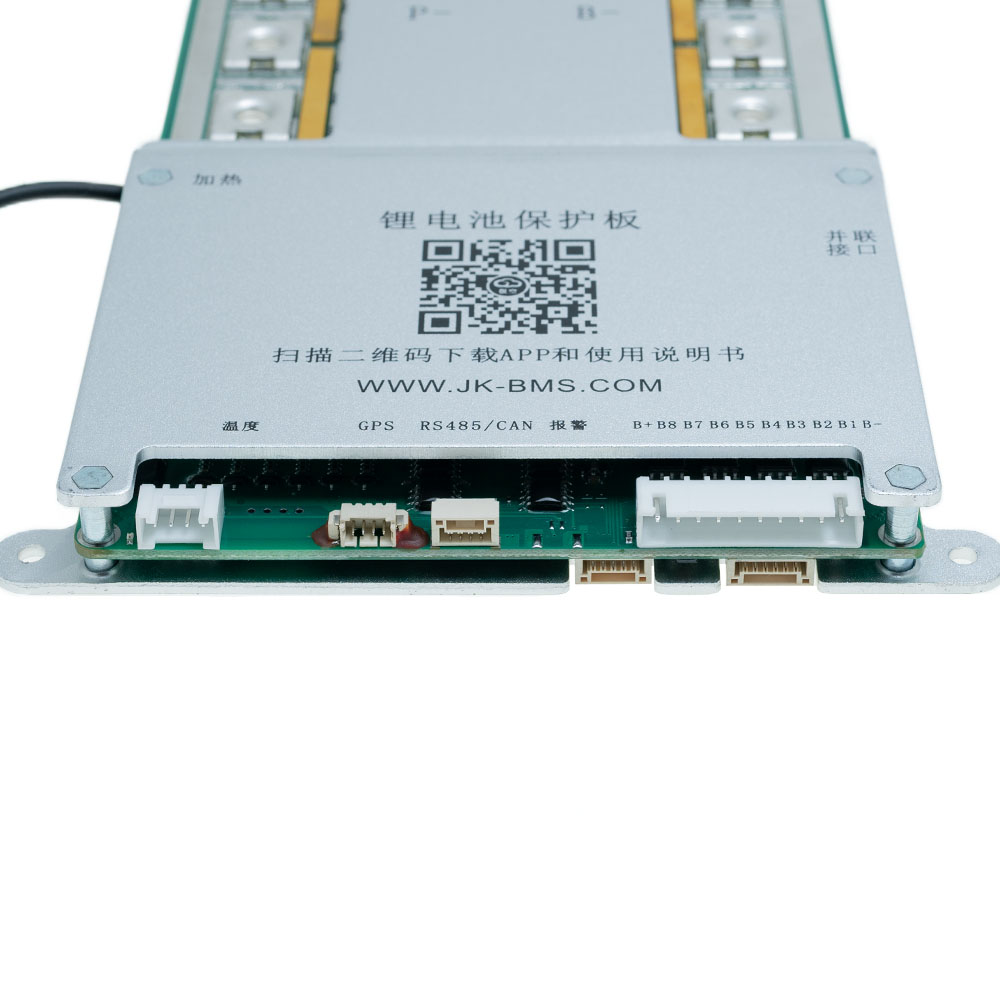
The TTL UART port, labeled GPSon some models, provides the BMS serial signal. By connecting acompatible TTL-RS485 converter, this signal can be output to the RS485 bus. The converter changes the signal transfer method. The communication protocol still depends on the BMS software.
In supported versions, the TTL port can also be connected directly to a computer using a USB-TTL cable with a built-in converter.In the JK PC program, you select the COM port assigned to the cable and the BMS address. The connection allows you to view battery data and configure parameters. PC program operation depends on the BMS hardware and software version.
| Weight | 0,55 kg |
|---|---|
| Dimensions | 184 × 127 × 16 cm |
| Manufacturer's code | B2A8S30PH |
| Continuous discharge current (A) | 300 |
| Continuous charging current (A) | 300 |
| Maximum instantaneous current (A) | 450 |
| Number of cells supported | LiFePO4 4S-8S; Li-Ion 3S-8S; LTO 6S-8S |
| Cell type | |
| Balancer | Active |
| Maximum balancing current (A) | 2 |
| Maximum heating output current (A) | 20 |
| Cell voltage range (V) | 1,2-4,35 Adjustable |
| Operating voltage range (V) | 7,5-36 |
| External communication | BT,PC |
| Built-in inverter protocols | No |
| Sockets | On/OFF-LCD,TEMP,RS485(GPS),Heat |
| Lenght (mm) | 184 |
| Width (mm) | 127 |
| Height (mm) | 16 |
| Weight | |
| Manufacturer | JK [JIKONG] |
| Certificate | CE,Rohs,FCC |
The most important information contained in the content: Types of cells Number of cells in a pack marked S-series and...
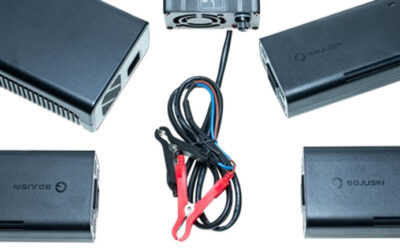
The most important information contained in the content: Types of cells (batteries) and selection of chargers for them...
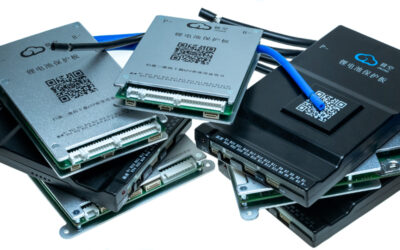
No one needs to be convinced of the advantages of batteries based on lithium technology. Their ability to store much...