
The most important information contained in the content:
- Types of cells
- Number of cells in a pack marked S-series and P-parallel
- Maximum continuous current for discharge and charge
- Balancers and balancing current
- Temperature probe
- BMS Standard and Smart
- BMS for operation with a frequency converter (inverter)
What will you learn from this article:
From the article you will learn about the types of cells and the possibilities of their series and parallel connection. As a result of connecting the cells of the right type, you will receive tips on the selection of BMS depending on the charging and discharging current. Improving the efficiency and extending the service life of the pack improves cell balancing – you will learn about the purpose of balancing and the type of balancers used. Increasing the safety of the work of packs is associated with the use of temperature probes. Ease and convenience of use is associated with the use of standard BMS and the Smart version. Large packs and the BMSs used in them ensure cooperation with Inverters (inserters) – the principles of this cooperation are described in this article.
Here are some simple rules to help you choose the right BMS for the package you are designing.
- Type of cells. Due to the different operating range voltages for different cells, it is necessary to choose a BMS designed for the correct cell type. For example, a BMS for LiFePO4 cells will protect an operating range between 2.5 and 3.65V per cell, while one designed for LI-Ion cells will protect 2.7 to 4.25V. It is not possible to use them interchangeably. Some of the BMS available on the market allow you to select the cell type, but you should check whether this option is available before purchasing.
- Number of cells in the package. Each BMS is adapted to the specific number of cells it supports. This information is given in the BMS symbol. As with cell types, some BMSs allow you to select the number of cells within a certain range (sometimes even suggest a number), while in others the number of cells is set by the manufacturer. Always check to see if the BMS can handle the number of cells you want.
When talking about the number of cells, we are talking about cells connected in series. It does not matter how many cells are connected in parallel. Both the 10S1P pack and the 10S8P pack will need a 10S BMS.

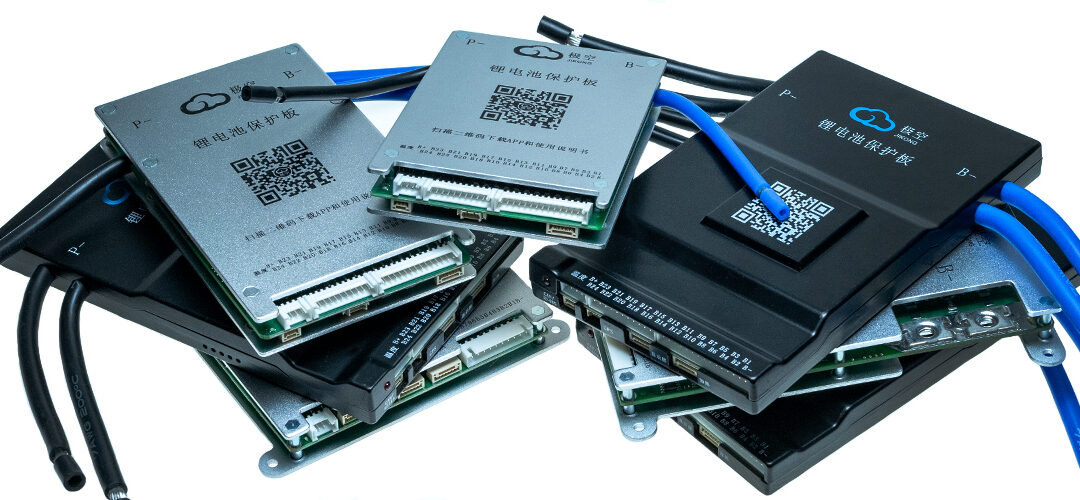
NOTE: The markings read from the BMS may be simplified. The BMS shown in the picture supports 8-24 Li-FePO4 cells, but only 8-21 Li-Ion cells. Always check the data sheet or technical description.
- Maximum continuous discharge and charge current. This is the highest current that we plan to draw from the pack continuously or with which we intend to charge it. This means drawing or charging for a time longer than the dozen or so seconds sometimes needed to start the connected device. Each BMS allows for momentary exceedances of this value and, for example, drawing 50-60A current for a few seconds from a 40A BMS will not destroy it, but if this time is longer or the current increases, the BMS will be damaged beyond warranty. A separate issue concerns BMS operating in systems that are discharged or charged for a long time with currents close to the maximum value. This situation most often occurs with power banks in photovoltaic installations. Here, you should choose a BMS with a current at least 30% higher than the planned parameters. You should also take care of its proper cooling.
This results from the principle of no connection between the capacity of the cells used and the required BMS operating current, which is selected solely for the planned operating conditions.
Both a system with powerful 600Ah cells and a small 20A BMS used to support small lighting for many weeks, and a system with small 20Ah cells and a large 200A BMS in a scooter, will be correct. It all depends on the application.
- Balancer and balancing current. Cell balancing is an additional function of BMS that allows to compensate for discrepancies between cells. Very often the names BMS and Balancer are used interchangeably. This is a mistake. These are two different devices, although currently most manufactured BMS are equipped with a balancer function. Balancers are divided into passive ones, which equalize the cell voltages only during cell charging, and active balancers, operating with much higher currents regardless of whether the cells are charged, discharged or stored. Passive balancers are sufficient for packs with smaller capacity, made of new, selected cells. Active balancers work much more effectively, they may be necessary for large cells, especially if we expect discrepancies in capacities and charging characteristics. The disadvantage of active balancers is their much higher price. An interesting solution is to use a cheaper BMS with a passive balancer and possibly later add a separate active balancer if it turns out that after a certain period of use the passive balancer is no longer sufficient.
- Temperature probe. Currently, almost all BMS are equipped with one or more temperature probes. They provide additional protection for the system in the event of detecting cell overheating. They are also used in more advanced solutions to block the possibility of charging lithium cells at negative temperatures.
Type of BMS. BMS Standard or SMART?

smart or standard

smart
BMS Standard -does not require any maintenance during operation of the package. All the safety parameters are set in it at the factory, and it is practically “invisible” to us when connected. Its additional advantages are smaller size and weight, much lower resting current consumption – important if you anticipate longer battery storage periods, and, of course, a lower price. In the case of the BMS DALY, an additional advantage is total water and dust resistance.
BMS SMART – enables full monitoring of the built package. Virtually all parameters for the entire battery and individual cells are immediately available. Depending on the communication method and the software used, it is also possible to partially change them. BMS SMART, depending on the version, can cooperate with mobile devices (Bluetooth, WiFi), LCD touch screens, voltage indicators, PCs and other external devices. Their disadvantages are larger size, more complicated operation (if you want to use additional functions) and higher resting current consumption. For this reason, they are not recommended for packs with a capacity of less than 10Ah. All batteries equipped with BMS SMART should be periodically recharged during storage. Due to the presence of multiple connection slots, it is not possible to achieve the same degree of moisture protection as for ordinary BMS.
When choosing a SMART BMS, it is worth considering right away how we will monitor the data coming from it. If we only want to use the mobile app, it doesn’t matter much. All BMS of this type enable communication via BT.
A whole range of accessories is available for BMS SMART, such as:
- LCD screens and voltage indicators
- Switches
- WiFi modules
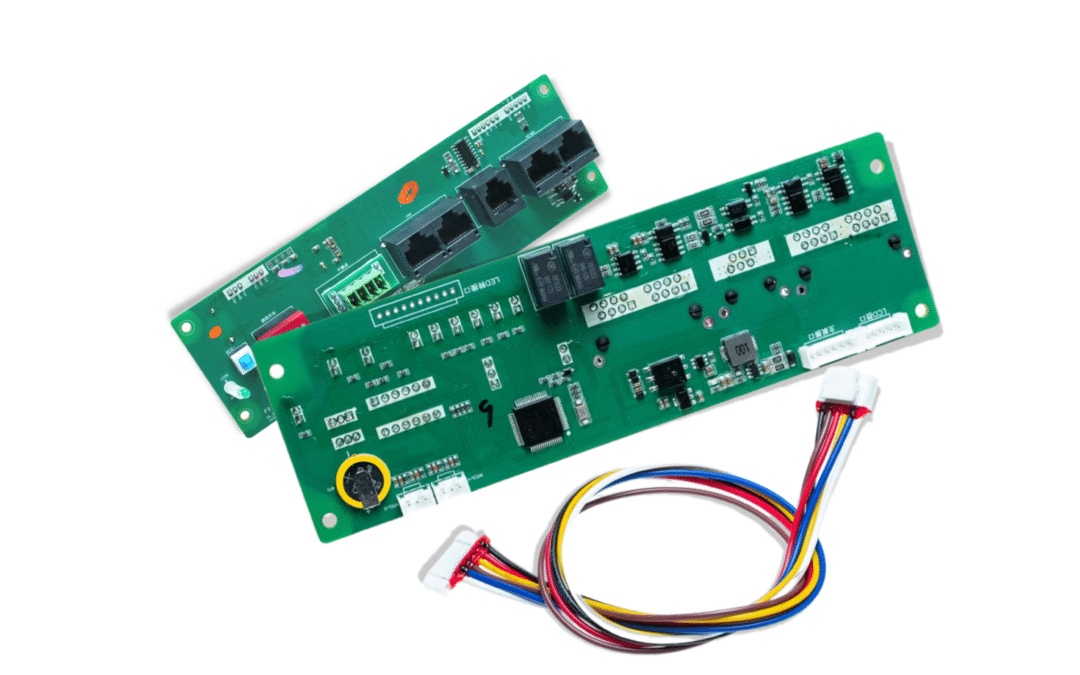
- Communication boards
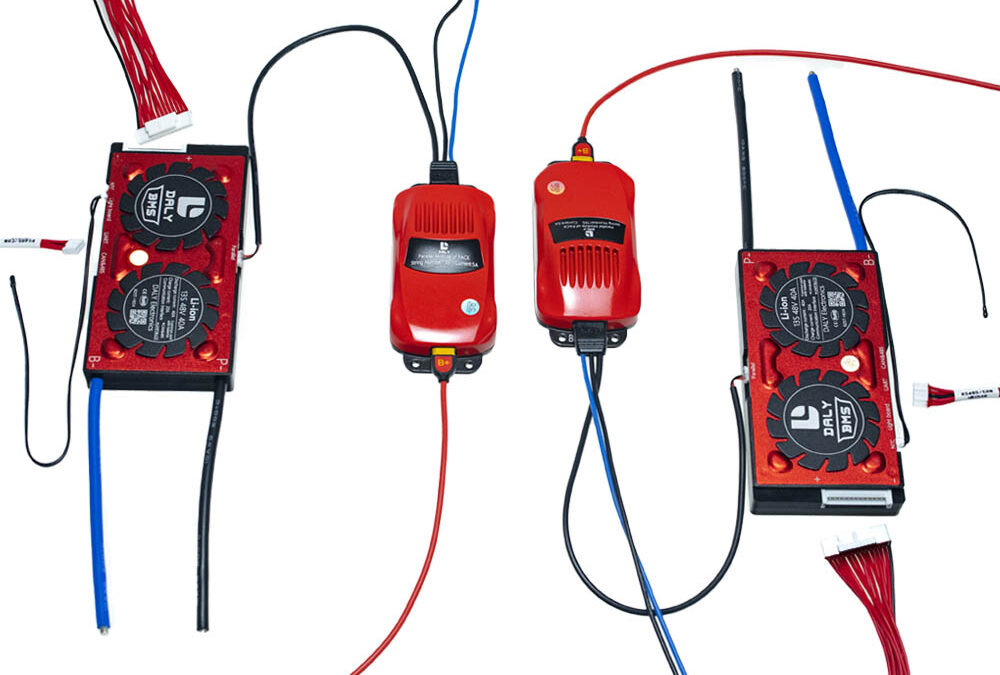
- Parallel modules for safe parallel connection of batteries
- GPS modules
- Heating mat control modules
Before purchasing a BMS, make sure that it supports the functions you require and is equipped with the appropriate sockets. Very often the same BMS (manufacturer series) have different software and equipment depending on the specifications set by the distributor.
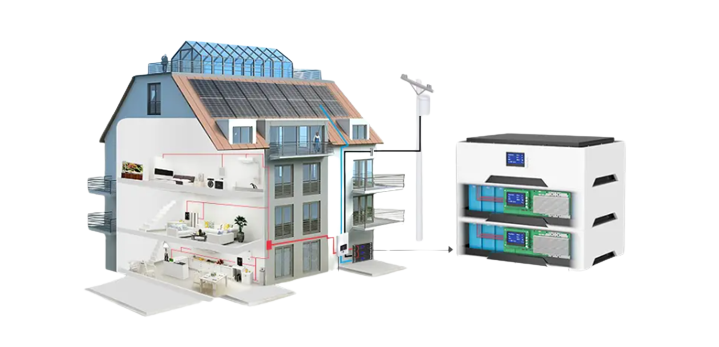
BMS for work with inverters. Due to the very popular use of lithium cells for energy storage, special versions of BMS SMART have been developed for such applications. Their operating principle is the same as any BMS, but they have advanced CAN/RS485 communication functions, ready-made communication protocols with most inverters and many additional functions that facilitate correct configuration of the storage. We describe them in a separate article.