
The most important information contained in the content:
- Types of cells (batteries) and selection of chargers for them
- Charging lithium batteries, including those working with an inverter
- Charging nickel batteries
- Charging lead-acid batteries
- First use and storage of batteries depending on type
What will you learn from this article:
The article will tell you what types of cells there are and what to look for when choosing the right charger. It describes the methods and principles of charging different types of batteries, such as lithium, nickel and lead. The durability of battery packs depends on the first charge and storage of the batteries – this should be done depending on the type of cells used.
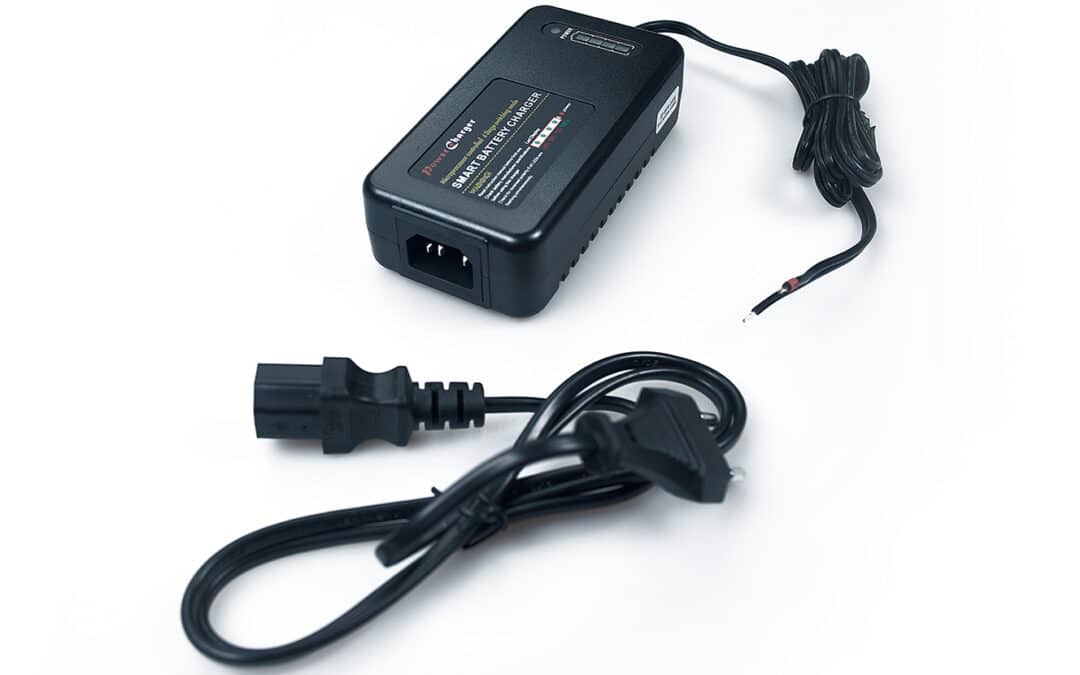
Charging batteries is a topic often neglected by users. The correct charging process has a decisive impact on the battery’s performance, its durability and, most importantly, its operational safety.
The easiest way out is to use the charger that came with the device from the factory. Most manufacturers of battery-powered devices provide an optimized charger.
The charger can be a separate device, but it can also be part of a larger device that works with the package, such as an inverter (inverter).
The problem arises when the charger is damaged and needs to be replaced, or when you build the pack yourself. Then it is worth learning the basic rules related to charging different types of batteries.
Three types of batteries are most commonly used:
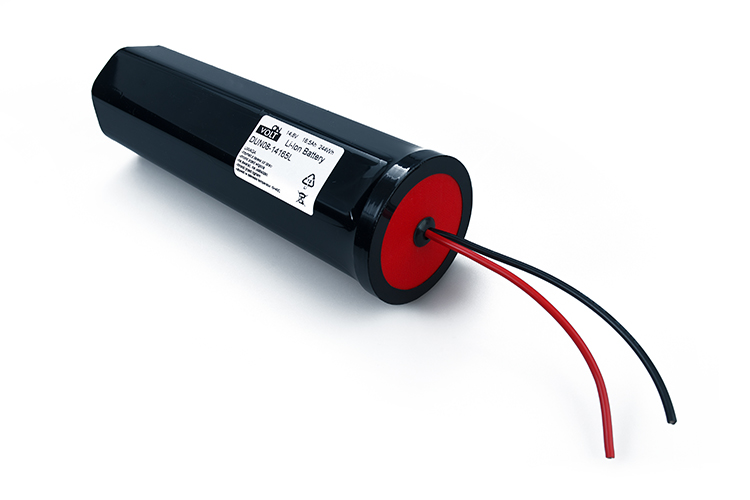
- Lithium Li-Ion (Lithium Ion), Li-Po (Lithium Polymer) or Li-FePO4 (Lithium Iron)
- Nickel Ni-Mh (nickel metal hydride), Ni-Cd (nickel cadmium) used in older devices, increasingly rare on the market.
- Lead-acid (Pb) automotive and stationary batteries
The basic rule is that chargers are not interchangeable between the three groups. Each requires a different charging process and trying to use the wrong type of charger can result in the inability to charge or destroy the battery, in extreme cases there is a real risk of fire or explosion of the battery (mainly with Li-Po cells).

Przykładowe oznaczenie na ładowarce

oznaczenie-na-pakiecie
- Charging lithium batteries is a very precise process, in simple terms consisting of two phases – the constant current charging phase and the constant voltage charging phase. Therefore, the charger must be dedicated to a specific number of cells connected in series. Therefore, a 3S (11.1V) pack, for example, requires a different charger than a 4S (14.8V) pack. This is critical to ensure safety requirements. While a properly sized BMS will not allow the pack to be overcharged, it is not correct for the charging process to be terminated by the BMS. It is supposed to be completed by a properly sized charger, and the BMS is supposed to watch over the voltages of individual cells and step in if one of them is overcharged (which the charger “doesn’t know”, because it only has information about the voltage of the entire pack). Using chargers from lead batteries to charge LIFePO4 batteries is not correct (lacking the required charging phases with constant current and voltage). Nevertheless, due to the coincidental coincidence of voltages, the use of chargers from 12V batteries for 4S LiFePO4 packs and chargers from 24V batteries for 8S LiFePO4 packs is sometimes used. However, you should be aware that it can reduce the life of the cells and you will probably not be able to achieve 100% charge. Any resulting damage to the cells will not be covered by the warranty.
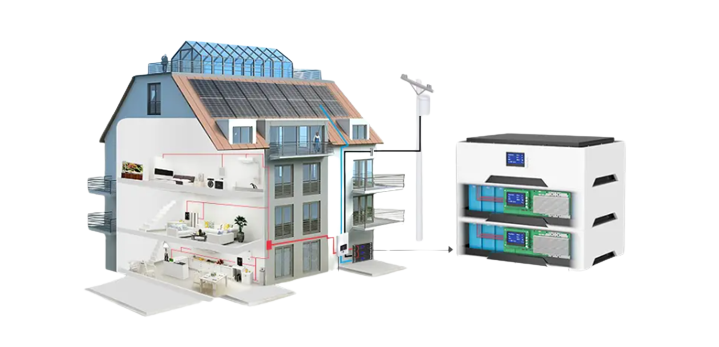
- Charging lithium batteries operating in a system with an inverter. There are two possible standards of operation with an inverter.
- Automatic – the data on the level of charge of the battery is sent to the inverter from the BMS via CAN/RS485 link. Based on them, the inverter makes decisions about the charging process (start, end, CC/CV phase change, transition to “Float mode”), as well as the end of the battery discharge capability. In this mode, you just need to make sure that the inverter supports the type and voltage of the battery you intend to operate, and that the BMS is set up to exchange data according to the protocol supported by the inverter.
- Manual – no inverter-BMS data exchange required. Completion of the charging and discharging process is based on manual setting of the voltage range on the inverter. The key is to set it so that the range on the inverter is “narrower” than on the BMS.
For example, for a 16S LifePO4 pack, you can set the operating voltage range to 3.0-3.5V per cell, or 48.0-56.0V per pack. Then on the BMS you need to set a wider range, for example, 2.8-3.65V per cell, or 44.8-58.4V. Such settings ensure that the inverter controls the charging and discharging process. Completion of the charging or discharging process by the BMS can also result in a battery disconnection message when working with an inverter and the need to restart the device.
- Charging nickel batteries – involves charging with a constant current. The charger shutdown is based on parameters such as charging time, voltage reached, cell temperature, or for more advanced chargers, ΔV voltage gain. Use a charger matched to the number of cells connected in series in the pack (each cell has a voltage of 1.2V), for example, a pack with 10 cells has a voltage of 12V. In practice, on the charger is indicated its rated charging voltage. The second selection parameter is the charging current. While using an “over-powerful” charger for a small pack will reduce charging time, it will drastically reduce the life of the pack and may result in overheating of the cells.
- Charging lead batteries – involves charging to a certain voltage. The current drops as it charges.
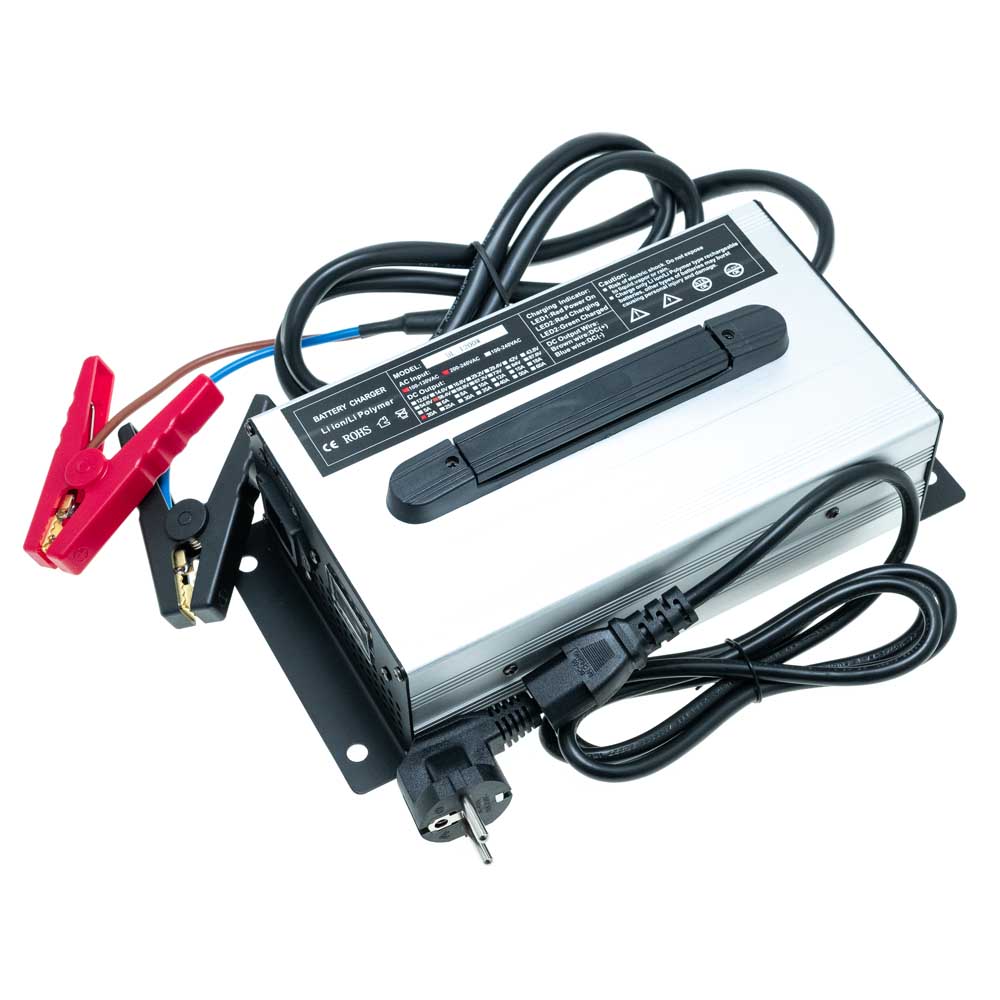
The range of loaders available from us, you can find here. If you have any doubts, please contact us. Properly selected charger, is a guarantee of safety and proper operation of the battery.
Information on first use and storage of batteries
For a trouble-free, long-lasting battery life, it is very important to charge them first and store them properly during the period when they are not in use. The procedure depends on the type of battery.
- Li-Ion, LiPo and LiFePO4 batteries – the battery is delivered, as partially charged. Before operation, it should be charged to the end without interrupting the process. Then you can operate the device normally. During long storage, it is best to maintain a partially charged state. This means that you should not wait until charging is complete, it is better to stop charging “in the middle”. Stored in this way, the battery will retain its parameters for a very long time. You just need to remember to recharge the package immediately before operation. The natural tendency of lithium cells to self-discharge is very low. However, since any battery pack based on these cells must be equipped with a BMS that draws minimal current even during sleep, it is necessary to check the charge level of the pack from time to time and recharge it if necessary. This is especially important for small packs (a few-something Ah) equipped with BMS SMART. Lack of such control can lead to cell damage. The second case where this control is very important is when you leave the battery connected to the inverter during a period of prolonged lack of sunlight. Since the inverter will then be powered by the battery, discharge can proceed rapidly. We recommend that during such periods, the inverter enable the low-current power supply function.
- Ni-Cd (nickel-cadmium) batteries – these batteries are no longer supplied as new (they have been replaced by Ni-Mh (nickel-metal hydride)), but it is worth knowing that they should be discharged “to the end” and then charged until the process is complete. We store them in a charged state, and it is a good idea to discharge and recharge them every few weeks during periods of intermittent use.
- Ni-Mh (nickel-metal hydride) batteries – such a battery, once purchased, we can immediately, normally operate in the device (with the knowledge that the operating time may be shorter than the target). After discharging, we charge it to the end of the process and during the next use, we also discharge it completely. By discharge to the end, we mean normal discharge during which we observe a marked decrease in the power of the device, or the brightness of the light. We try never to discharge the battery “to zero”, such as leaving the device on unattended. Such a discharge is very harmful to the battery and the consequences of such an action are not covered by the warranty. After another full charge, we can already operate the battery normally, we do not need to discharge it completely, we can recharge it after use. We store Ni-Mh batteries in a charged state, during longer breaks we recharge them every few weeks (without discharging them first).